

Blog
Autonomous AI Agents for Ecommerce: Get Started Fast

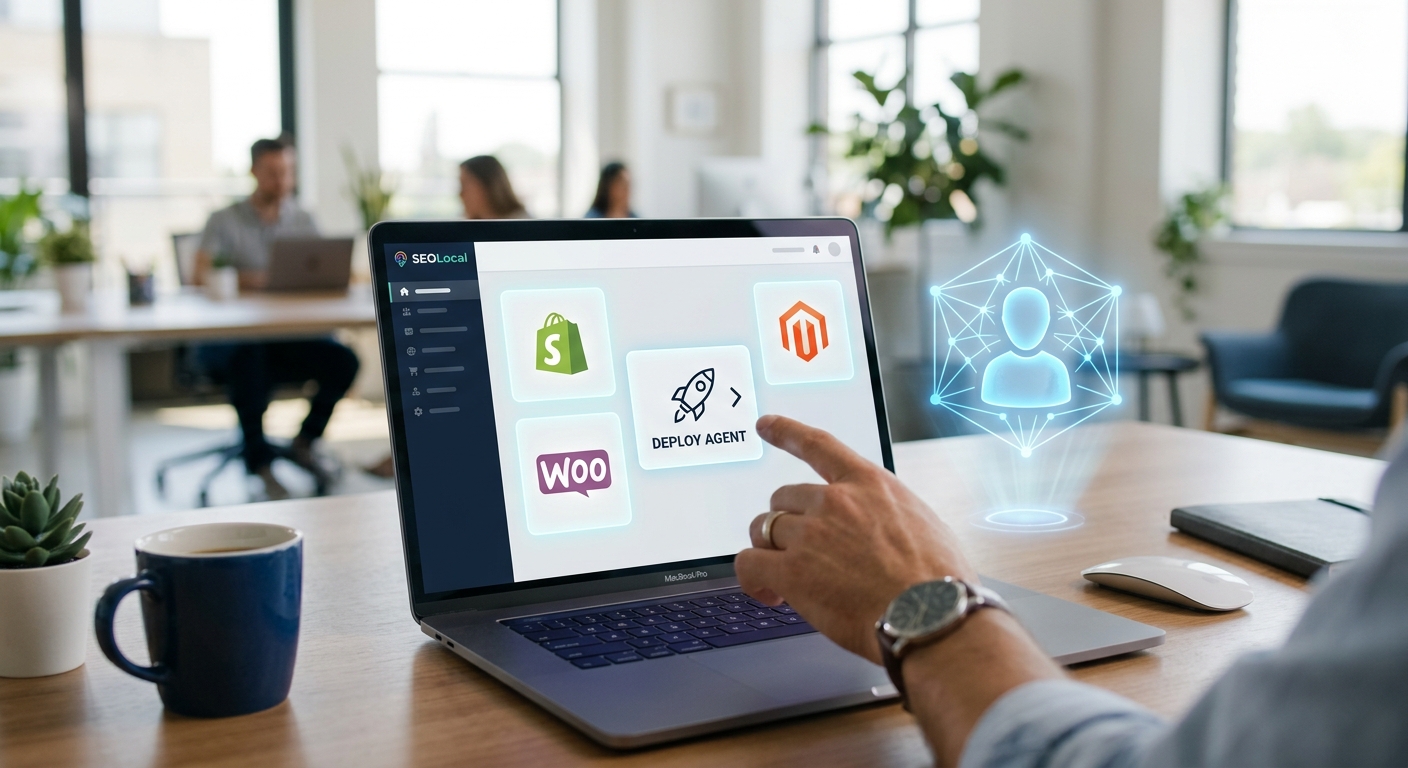
Table of Contents
Deploying Autonomous AI Agents for Ecommerce
Now that we understand the potential, deploying autonomous AI agents for ecommerce takes three straightforward steps. Drawing on our expertise in AI digital twins for marketing, these steps ensure seamless integration and rapid results.
- Choose an integration method – Use our plugin or API to connect with Shopify, WooCommerce, or Magento, with full WordPress plugin support for quick setup.
- Define agent workflows – Our self-operating AI agents automate product description generation, meta tag updates, and internal linking based on keyword groups, enabling agentic SEO for ecommerce and conversational commerce autonomous agents.
- Set monitoring rules – Agents run weekly performance checks and adjust strategies based on ranking data; as Search Engine Land notes, continuous AI optimization keeps you competitive.
- Test with a 30-day trial – No contract or commitment, human approval before publishing ensures a risk-free rollout.
These autonomous AI agents for ecommerce deliver tangible improvements quickly. Results may vary, but measurable gains are typical. Once deployed, track your success with measurable KPIs to refine your strategy. Ready to automate your ecommerce SEO? Start your free trial today.
Prerequisites for Autonomous AI Agent Setup
Before you can deploy an autonomous AI agent that drives marketing results, you must ensure a solid foundation is in place. Autonomous AI agents for ecommerce rely on accurate digital representation, live data synchronization, and clear operational rules.
A critical first step is configuring an AI digital twin that can represent your brand on global maps. As SEOLocal’s knowledge base explains, an AI digital twins for marketing must be integrated with your Google Business Profile to maintain consistent brand presence and enable map-native interactions worldwide.
Next, ensure your ecommerce platform’s API is ready to facilitate live sales data synchronization. Our internal guidelines recommend establishing a read-only API connection and webhooks for immediate event notifications—new purchases, cart abandonment, leads—so the agent can respond in real time. This synchronization enables agentic SEO for ecommerce by feeding current sales signals into the agent’s optimization logic, while conversational commerce autonomous agents use the same data to engage shoppers directly in map search results or on your storefront.
Set clear business rules and escalation thresholds: automatically approve discounts under your preset value while routing higher-value cases to a human. Prepare a monitoring dashboard—using our analytics tools—to track the agent’s performance from day one.
Once these prerequisites are in place, you can configure and launch your autonomous AI agent for ecommerce—where we typically see Fast SEO Results! after proper agent setup.
Select Your Ecommerce Platform
Platform Selection Instructions
When selecting your ecommerce platform, it’s critical to support autonomous AI agents for ecommerce that can drive sales. Start by identifying your business scale and customization needs. Next, evaluate each platform’s API documentation and plugin marketplace for AI tool compatibility. Finally, test scalability with a trial or sandbox. While our AI-driven local SEO services are platform-agnostic, they are optimized for WooCommerce. Our platform selection advice and 30-day trial come with no contract or commitment, so you can evaluate risk-free.
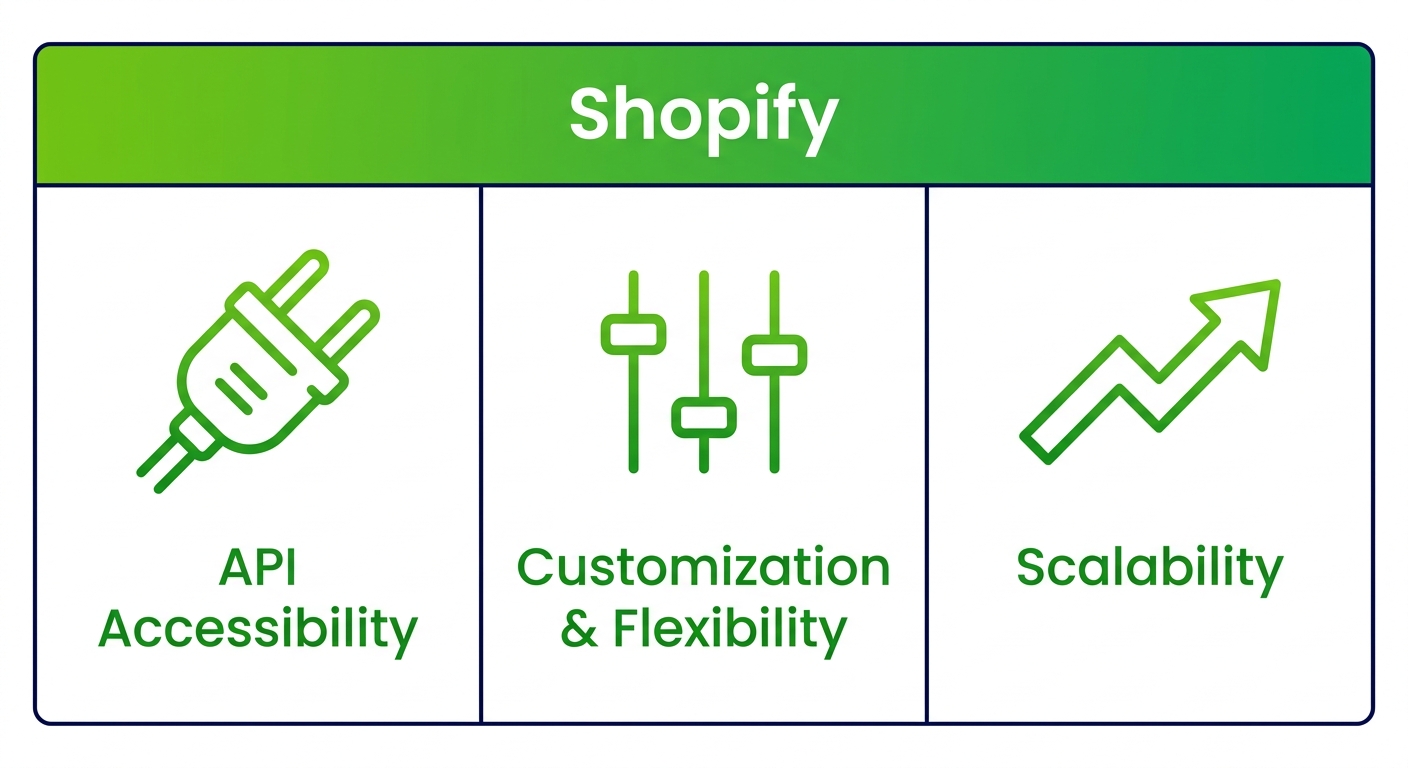
Visual feature comparison of Shopify for ecommerce.
Why Platform Choice Matters
According to CXL’s AI marketing training, open APIs let agents start working in days, not weeks. Platform compatibility lays the groundwork for deploying AI digital twins for marketing that sync with live sales data, enabling agentic SEO for ecommerce that accelerates revenue.
Tips for Platform Evaluation
Prioritize platforms with RESTful or GraphQL APIs for real-time data sync with conversational commerce autonomous agents. Evaluate plugin marketplaces for AI tool compatibility, review API documentation, and test scalability in a sandbox. This ensures your store can support automation from day one.
Install SEOLocal’s AI Agent Plugin
Leverage autonomous ai agents for ecommerce by installing the SEOLocal AI Agent Plugin. Follow these steps:
Plugin Installation Instructions
- Log in to your SEOLocal dashboard.
- Download the SEOLocal AI Agent plugin from the Plugins section.
- Upload the plugin to your ecommerce platform (WordPress, Shopify, etc.) via the plugin repository or manual upload.
- Activate the plugin and create an administrative account.
- Grant consent when prompted to connect to our remote master server for data sync.
Important: This plugin requires an administrative account and connects to a remote master server. Client consent is mandatory.
Importance of Correct Installation
Correct installation enables seamless data sync with our AI engine and automated campaign execution. Improper setup can break these connections, preventing agentic seo for ecommerce from functioning. We therefore recommend following each step precisely.
Secure Setup Tips
- Enable two-factor authentication on the administrative account.
- Limit admin access to trusted users only.
- Payment processing uses Stripe tokenization (see our security FAQ).
- For conversational commerce autonomous agents, confirm you have granted consent for the remote master connection.
Configure Agent Permissions and Integrations
Now that you understand how agents boost retention, configuring them properly is the next step. When setting up autonomous AI agents for ecommerce, correct permissions are vital for seamless operations.
Permission and Integration Steps
Follow these steps to enable agent actions: For Shopify, navigate to Settings > Apps > Manage private apps to generate an API key and password. For Magento, create an integration under System > Integrations. Grant read access for product catalogs, write access for orders and inventory, and optional access for customer data. These permissions enable agents to answer queries, update stock, process returns, and send promotions. Our autonomous AI agents for ecommerce can then autonomously run abandoned cart emails without approval.
Why Permissions Affect Autonomy
Correct permissions allow agentic SEO for ecommerce campaigns like personalized recommendations and cart recovery. According to our knowledge base, digital twins sync live data to enhance autonomy, enabling proactive retention strategies.
Security Best Practices
For conversational commerce autonomous agents, use role-based access control with separate API keys, test in a sandbox, and apply least privilege. Plugin installation creates an administrative account linking to our server—client consent is required. With permissions set and integrations live, you can now test agent responses risk-free.
Set Up Autonomous SEO and Content Creation
Now that you understand the SEOLocal agent, we’ll activate autonomous SEO and content creation using autonomous AI agents for ecommerce.
Activating SEO Automation
- Log in to your SEOLocal dashboard.
- Enable the autonomous SEO agent from the settings.
- Configure on-page optimization to handle meta tags and schema.
- Set up link building for quality backlinks.
- Turn on content generation to produce AI-driven articles.
Our SEOLocal agent leverages advanced agentic SEO strategies for on-page optimization and link building, ensuring your site stays competitive.
Value of Autonomous SEO
Our AI-driven autonomous SEO drives organic traffic while reducing manual work. We emphasize quality vs quantity in every campaign, delivering Fast SEO Results! without long-term contracts. No ranking guarantees are made; results may vary.
Content Strategy Tips
First, choose a professional or conversational tone based on your audience. Second, target local keywords like SEO in Miami, always with prepositions. Third, schedule posts using our built-in scheduler to stay consistent. For ecommerce stores, applying agentic SEO for ecommerce automates product page optimization, while conversational commerce autonomous agents enhance customer engagement.
Enable Revenue Attribution Tracking
Revenue Attribution Setup
Once your autonomous AI agents for ecommerce are live, enable attribution tracking to measure sales impact. Add UTM parameters to each agent’s conversation links. Connect your Shopify or WooCommerce store via our sync feature to automatically attribute sales to conversational commerce autonomous agents. In the Attribution Settings, set conversion metrics and link Google Analytics. Choose a last-touch or multi-touch model to avoid over-crediting.
Importance of Attribution
Accurate revenue attribution is critical for autonomous AI agents for ecommerce. It reveals which agents drive the highest revenue per session, enabling smarter budget allocation and refinement of agent behaviors. This data empowers you to refine messaging and targeting. Without it, evaluating ROI remains guesswork.
Accurate Tracking Tips
- Consistently apply UTM parameters across all agent links and landing pages.
- Deduplicate conversions by setting a consistent attribution window (e.g., 30 days) in your analytics.
- Cross-validate our reporting with third-party analytics to confirm agentic seo for ecommerce results.
Deploy Conversational Commerce Agents
Once you have selected the right agent type, deploying autonomous AI agents for ecommerce is straightforward and immediately valuable for your store. We recommend starting with FAQ automation for your top 10 support queries to reduce ticket volume and improve response times.
Deploying Conversational Agents
Enable chatbot agents through API integration with common live chat platforms like Intercom or Zendesk using your vendor’s AI connector. Our AI-driven local SEO platform can streamline this setup for SMBs. Configure automated responses based on inventory and policy data, and ensure any promotional messaging complies with Interactive Advertising Bureau (IAB) standards for transparency and disclosure.
Impact on Support Costs
Typical ecommerce sites may see a 25–30% reduction in first-response volume after deploying an FAQ agent, creating room for agentic SEO for ecommerce as a strategic outcome. We advise configuring escalation paths that route complex issues to human agents within 2–3 interactions, supported by competitive pricing on our automation tools.
User Experience Tips
Personalize conversational commerce autonomous agents using customer purchase history and location data where available. A privacy notice must accompany this: client data is not sold or rented. Build clear FAQ flows, define explicit handoff triggers, and keep fallback responses helpful and transparent. These initial steps set the stage for continuous performance tuning.
Monitor Campaign Performance and Scale
Once your autonomous AI agents for ecommerce are live, monitoring their performance becomes the next critical step for sustained growth. Our platform provides integrated dashboards that make this oversight straightforward and actionable for businesses in Miami, FL and beyond.
Monitoring Agent Performance
We access the SEOLocal dashboard daily to review ranking reports and campaign metrics for each deployed agent. According to internal documentation from SEOLocal, the AI-driven local SEO system displays performance trends and flags underperforming agents so our team can reallocate resources quickly. This continuous review of observed rankings informs smarter, data-driven adjustments without guesswork, delivering Fast SEO Results! through informed optimization.
Managing Multiple Campaigns Simultaneously
Because monitoring is continuous, our approach to agentic SEO for ecommerce enables real-time adjustments across SEO, content, and ad campaigns simultaneously. There is no need to pause one initiative to manage another, which means we can maintain momentum across all client campaigns and respond to conversational commerce autonomous agents’ data signals as they emerge.
Scaling Your Agent Operations
Scaling begins with one location’s agent and expands naturally to additional stores using our white-label dashboard and branded reporting. This option lets agencies present performance data under their own brand, building client trust while managing multi-location growth. Teams looking to fully leverage these capabilities can benefit from dedicated AI marketing training to master advanced platform strategies.
No guarantee of specific ranking improvements; results may vary.
Resolving Common Deployment Challenges
Deploying autonomous AI agents for ecommerce isn’t just about turning on a few settings; it surfaces real integration, data, trust, and scalability hurdles that demand thoughtful solutions. Without careful planning, these obstacles can derail even the most promising agentic SEO for ecommerce strategy, quickly turning a competitive advantage into a costly misstep.
Integration complexity often tops the list. Ecommerce platforms like Shopify, WooCommerce, or Magento rarely plug-and-play with new AI tools. A phased rollout using API middleware minimizes disruption. Our internal knowledge base explains that digital twins—virtual replicas that mirror customer behavior—can simulate integration scenarios before full launch, revealing friction points early. According to SEO Local, this testing approach helps ensure that AI shopping agents operate smoothly alongside existing CRM and order management systems.
Data quality is equally critical. Agents trained on messy, inconsistent product catalogs or outdated customer records will underperform. Before deploying intelligent ecommerce bots, implement robust data governance: standardize attributes, clean duplicates, and enforce update protocols. Industry publication Search Engine Land notes that data silos and latency problems are common culprits in failed agent rollouts. With structured data, the agent can deliver accurate, helpful responses that build trust.
User acceptance hinges on transparency. Shoppers interacting with conversational commerce autonomous agents need clear signals that they’re speaking with AI—simple disclosures and easy opt-out options preserve confidence. Scaling without performance degradation demands load testing. Our platform’s digital twins simulate peak traffic to verify stability before widening deployment. While we cannot promise specific outcomes, our experience shows that businesses using AI-powered local SEO platforms often resolve these challenges faster through automated testing and iterative optimization.
Overcoming these challenges unlocks effective autonomous AI agents for ecommerce and leads directly to measurable ROI. SEOLocal’s no-contract AI platform is engineered to help you realize Fast SEO Results!
Maximizing Your Autonomous AI Agent Investment
To truly capitalize on these capabilities, focus on maximizing your investment. By leveraging our 30-day trial, you can deploy autonomous ai agents for ecommerce and measure tangible ROI without upfront commitment. Track key metrics like local organic search rankings in Miami, click-through rates, and revenue per visitor, demonstrating real value and validating our quality vs quantity approach.
Our agentic seo for ecommerce optimizes conversational commerce autonomous agents to deliver hyper-personalized experiences on your Shopify or WooCommerce platform, focusing on quality over quantity. By aligning with digital advertising standards, we ensure compliance and drive sustainable SEO improvements. Avoid expecting instant results; instead, commit to consistent optimization. With competitive pricing and no contract or commitment, you can scale as ROI is proven. Explore our case studies for real-world success.
Start driving Fast SEO Results! with our 30-day trial. We’ll show you the quality vs quantity advantage of AI-driven local SEO and how autonomous agents elevate your store.