

Blog
A Practical Guide to Ranking Higher on Google: 2026 SEO Strategies


Table of Contents
Your Roadmap to Higher Google Rankings
A practical guide to ranking higher on Google starts with a clear-eyed understanding that no shortcut or payment guarantees a top position; only consistent adherence to Google’s Search Essentials and ethical SEO practices can build lasting visibility. According to Google’s own documentation, meeting the technical requirements and producing people-first content makes a site eligible for search, but it does not ensure high rankings. Ongoing effort and adherence to best practices are necessary for meaningful improvements, and Google Search Console provides the tools to analyze site performance and identify areas for optimization. Our AI-driven platform, available with a 30-day free trial and no contract, helps businesses implement these practices consistently and monitor progress through integrated reporting. To apply these principles effectively, we must first examine the core factors that Google uses to evaluate websites.
Key Takeaways
- Before exploring specific methods to improve SEO ranking, we should first understand Google’s own framework for search eligibility.
- Search engines can only rank pages they can find and understand.
- Google’s ranking systems increasingly reward content that demonstrates genuine helpfulness rather than just keyword placement.
- After creating valuable, people-friendly content, optimize on-page elements to signal relevance to search engines.
- Once on-page elements like keywords and meta tags are properly aligned, focus on building authority through quality backlinks.
Understanding Google’s Ranking Essentials
Before exploring specific methods to improve SEO ranking, we should first understand Google’s own framework for search eligibility. Google Search Essentials, as documented by Google Search Central, outlines three core areas: technical requirements, spam policies, and key best practices. Meeting these standards is necessary for a site to be considered for Google Search, but it does not guarantee indexing or ranking.
The technical requirements form the baseline—pages must be accessible to Google’s crawlers, links should be crawlable, and content must be visible. Spam policies prohibit deceptive behaviors such as automatically generated queries, cloaking, or manipulative linking schemes that can result in lower rankings or removal. Abiding by these rules keeps a site safe for search.
The best practices emphasize a people-first approach over search-engine-first shortcuts, a quality vs quantity mindset. Creating reliable, user-centric content, using descriptive titles and headings, and ensuring links are crawlable all support long-term visibility. Google Search Console offers tools to monitor site performance, detect traffic drops, and validate adherence to these essentials.
With the essentials clear, we can now focus on making sure your website meets the technical requirements Google expects, building a solid foundation for all subsequent improvements.
Step 1: Build a Strong Technical Foundation
Search engines can only rank pages they can find and understand. According to Google Search Central’s official guidelines, meeting the technical requirements laid out in the Search Essentials is a necessary baseline for search visibility, not a ranking guarantee. Even technically flawless sites must still earn placement through relevance and authority.
The core prerequisites for gaining search visibility include ensuring that every important page uses crawlable anchor links, loads quickly on mobile devices, and presents a mobile-friendly design. Content must also adhere to Google’s spam policies, including the people-first content policies, regardless of how technically sound a site appears.
Google Search Console is the primary tool for analysing site performance metrics, identifying issues such as sudden drops in traffic, and monitoring element health. Reviewing these signals regularly helps site owners maintain eligibility as Google’s guidelines evolve. Once the technical floor is solid, you can shift focus to creating compelling, people-first content that answers searchers’ needs.
Step 2: Develop Compelling, People-First Content
Google’s ranking systems increasingly reward content that demonstrates genuine helpfulness rather than just keyword placement. People-first content is created to satisfy a reader’s question completely and informatively, not to manipulate search algorithms. It directly addresses user intent with thorough, satisfying answers. Instead of chasing short-term ranking tricks, focusing on genuine helpfulness builds the trust and authority that search engines look for.
To develop this kind of content, we conduct audience research to identify real questions, pain points, and the language patterns that potential visitors use. We structure information so the most important details appear early, improving readability and increasing the chance of earning featured snippets. Adding original insights and unique perspectives further differentiates our material from competitors.
Once people-first content is in place, the focus shifts to refining on-page elements like titles, meta descriptions, and headers—so they reinforce relevance and boost click-throughs. Our approach combines audience insight with AI-driven, data-powered content creation to build long-term organic authority.
Step 3: Optimize On-Page Elements for Keywords
After creating valuable, people-friendly content, optimize on-page elements to signal relevance to search engines. Title tags should include the target keyword and be compelling while staying concise. Meta descriptions, while not a direct ranking factor, should incorporate the keyword naturally and entice clicks. Use clear header tags (H1 with the keyword) and short, descriptive URLs with hyphens, avoiding stop words. Internal links with natural, keyword-rich anchor text connect related pages and help search engines map your site structure. Image alt text should describe the image accurately and include the keyword only if it fits organically, aiding accessibility. Avoid keyword stuffing. Keywords must appear seamlessly and only where they make sense. While on-page optimization establishes relevance, AI-driven local SEO tools can streamline the process; it remains just one piece of a broader strategy. With this foundation, the next step is to build authority through quality backlinks from relevant sources.
Step 4: Earn Quality Backlinks for Authority
Once on-page elements like keywords and meta tags are properly aligned, focus on building authority through quality backlinks. Backlinks act as votes of confidence from other websites, signaling to search engines that your content is trustworthy and relevant. For local SEO, links from respected community organizations, industry publications, and authoritative directories carry the most weight. In contrast, spammy links from irrelevant link farms or low-quality directories can harm your site’s ranking, making relevance and domain authority more important than quantity.
Earning these valuable links requires ethical, relationship-based strategies. Guest posting on reputable industry blogs, identifying broken links on high-authority sites and suggesting your content as a replacement, and participating in expert roundups that highlight your expertise are all effective approaches. Building partnerships with local associations and sponsoring community events can generate contextually relevant backlinks that reinforce your local presence.
This link authority strengthens your on-page foundation and directly supports stronger local search performance, a topic we’ll explore next.
Step 5: Master Local Search and Google Business Profile
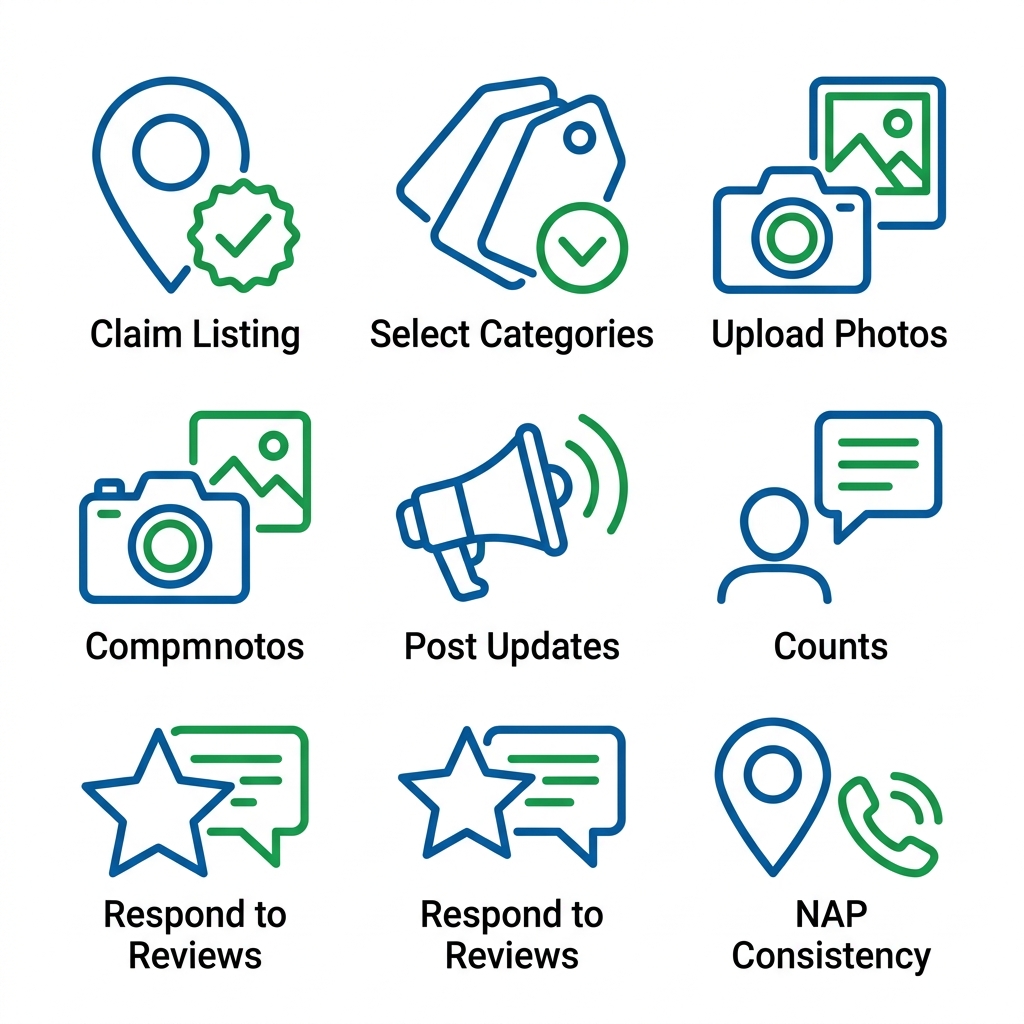
- Claim and verify your GBP listing if you have not already done so.
- Select primary and secondary categories that accurately reflect your core services.
- Upload high-quality photos of your business exterior, interior, team, and products.
- Post regular updates and announcements to signal active engagement to Google.
- Respond professionally to all reviews to build trust and demonstrate responsiveness.
We also support booking integration with partners: Square Appointments, Fresha, Setmore, Mindbody, Wix, and Reserve with Google.
Maintain name, address, and phone (NAP) consistency across local directories to strengthen local ranking signals.
Step 6: Prioritize with the 80/20 Rule
The 80/20 principle holds that a small proportion of inputs generates a disproportionate share of results. For local SEO, this translates to concentrating on the handful of tasks that most directly affect relevance and prominence. After you have fully optimized your Google Business Profile, deciding where to direct ongoing effort is the critical next challenge. By focusing on the vital few activities — such as completing every GBP field, earning consistent positive reviews, and building targeted citations from trusted directories — you avoid spreading resources across low-impact tactics like minor page-level adjustments. We recommend auditing your current work and ranking each task by its potential to strengthen both relevance and prominence in Google’s local results. SEOLocal’s AI-driven platform analyzes your profile and the competitive landscape to highlight exactly these high-impact optimizations, and our no-contract pricing lets you test the approach without commitment. With a clear set of priorities, you can measure performance and refine your strategy.
Step 7: Track Performance and Refine Your Strategy
Monitoring site performance after implementing changes reveals which optimizations are working and where further adjustments are needed. According to Google’s Search Essentials, meeting every technical requirement and best practice still does not guarantee rankings, so ongoing tracking is how we refine our strategy. We analyze which pages attract the most impressions and clicks versus those underperforming, then reallocate content updates and link-building efforts to high-potential areas. Regular reviews of search analytics—examining query data and keyword trends in tools like Google Search Console—uncover fresh opportunities, such as low-performing pages that could benefit from refreshed information, or rising search queries to target. Comparing current metrics against earlier benchmarks measures progress objectively and validates strategic choices. These performance insights highlight specific areas for improvement and the common barriers sites face, guiding the next round of optimization.
Overcoming Common SEO Challenges
Facing common SEO challenges is a natural part of the optimization process, and a systematic approach can turn these obstacles into opportunities for stronger visibility.
A sudden drop in rankings often signals an algorithmic or technical issue. We check Google Search Console for manual actions, review recent site changes like template updates or redirects, and cross-reference the timing with known core algorithm update dates. Understanding whether the drop aligns with a Google update helps us avoid misdirected fixes. This methodical diagnosis quickly isolates the root cause so we can apply targeted corrections.
Thin or duplicate content undercuts ranking potential by diluting topical authority. When pages compete for the same query, merging them into a comprehensive resource often yields better performance. We consolidate similar pages, add original data or expert insights, and ensure each page serves a distinct primary keyword intent. Strengthening content in this way helps search engines understand page relevance and boosts organic visibility.
Technical obstacles like broken internal links or poor page speed silently derail progress. Using site audit tools, we uncover crawl errors, prioritize fixes based on severity, and assess Core Web Vitals scores to improve loading and interactivity. Even small improvements to server response times or image compression can lift overall site performance and user experience. Addressing these structural issues removes barriers that prevent search bots from indexing and ranking our pages efficiently.
Overcoming these hurdles equips our team to execute the full strategy with confidence, setting the stage for consistent, long-term visibility improvements.
FAQ
Can you pay to rank higher on Google?
No, you cannot pay to rank higher on Google. Google Search results are free, and payment does not influence organic rankings. The search engine’s algorithms determine placement based on content quality, relevance, and adherence to Google’s Search Essentials guidelines.
What is the 80/20 rule in SEO?
The 80/20 rule in SEO means a small portion of efforts produces most ranking results. For local SEO, focus on the few tasks that directly affect relevance and prominence, such as fully optimizing a Google Business Profile, earning consistent positive reviews, and building citations from trusted directories, rather than spreading resources across low-impact page tweaks.
How to get my business on top of Google search for free
To get your business on top of Google search for free, follow Google’s Search Essentials. Build a strong technical foundation, create people-first content that answers user questions, optimize on-page elements like titles and meta descriptions, earn quality backlinks from relevant sites, and maintain an accurate, fully optimized Google Business Profile. Use Google Search Console to track performance and refine your strategy over time.
Putting Your Practical Guide into Action
Now that you’ve learned how to navigate common SEO obstacles, it’s time to put your practical guide into action. The guide’s core steps—keyword research to identify high-value search terms, on-page optimization for technical relevance, engaging content that answers visitor intent, and authoritative link building—work together to improve search visibility. Start with one immediate action: run a quick technical audit to uncover on-page issues or optimize one high-performing page to gain visible improvements. We support it with AI-driven analysis and reporting. Consistent monitoring, adjustment to algorithm updates, and iterative content refinement drive long-term gains. We can’t guarantee specific rankings, but adopting a practical guide to ranking higher on Google gives your business a structured framework to grow search performance sustainably. If you install our plugin, it will create an administrative account and connect to our master server, so give consent before installing; review any minimum contract terms, and note our terms limit liability and are governed by Florida law.
Start Your Free SEO Trial
You’ve just walked through a comprehensive roadmap to ranking higher on Google, covering technical foundations, compelling content, and local search tactics. Putting these strategies into action is the next logical step, and the right tools can make all the difference. SEOLocal’s AI-powered SEO platform automates many of the tasks discussed, from on-page optimization to GBP management. You can start with a free 30-day trial, with no contracts or long-term commitments required. Experience how our tools can streamline your SEO efforts and help you monitor progress. Test drive the features risk-free and see if it fits your business. Your journey to better search visibility starts today.